

Insights on Strategy, Execution & Complex Organisations
I write about how strategy, execution and organisational design work in real-world environments — the kind that resist simple plans, reward systems thinking, and require leaders to adapt with clarity and purpose. Here you’ll find insights on strategic ambiguity, strategic manoeuvre, organisational viability, decision-making in complexity, and practical leadership thinking.
Browse the latest articles, or explore by topic below.
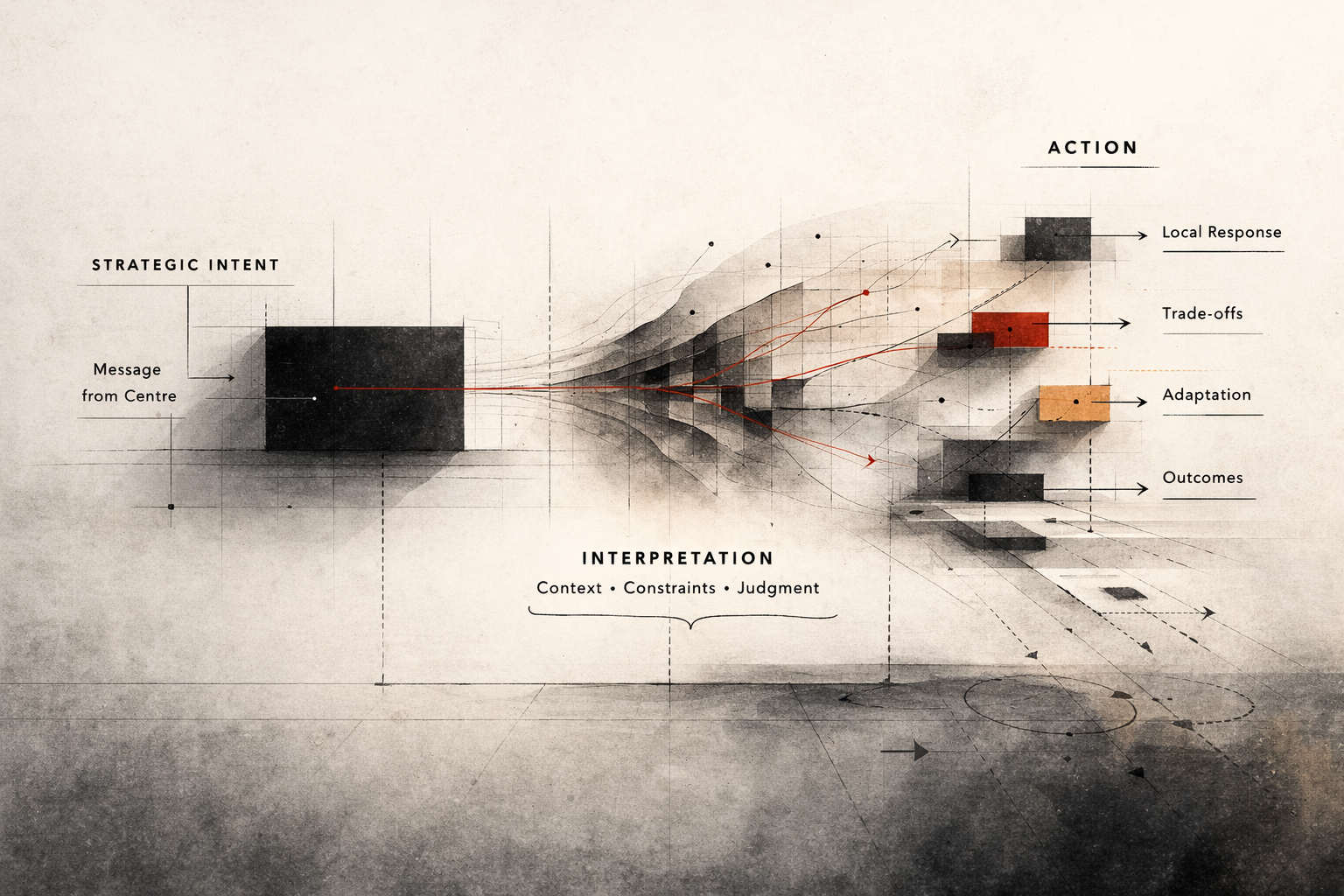
The Power is in the Interpretation
The execution problem that more communication fails to solve
Most leaders treat interpretation as noise, something to be minimised through clearer messaging, tighter briefs, and more consistent narratives. They are wrong. Interpretation is not the enemy of execution. It is the mechanism through which strategy becomes action.
The clarity trap
When execution falters, leaders reach for a familiar explanation: people didn’t understand. The strategy wasn’t clear enough. The message didn’t land. So they pursue clarity. More specific language. Simpler frameworks.
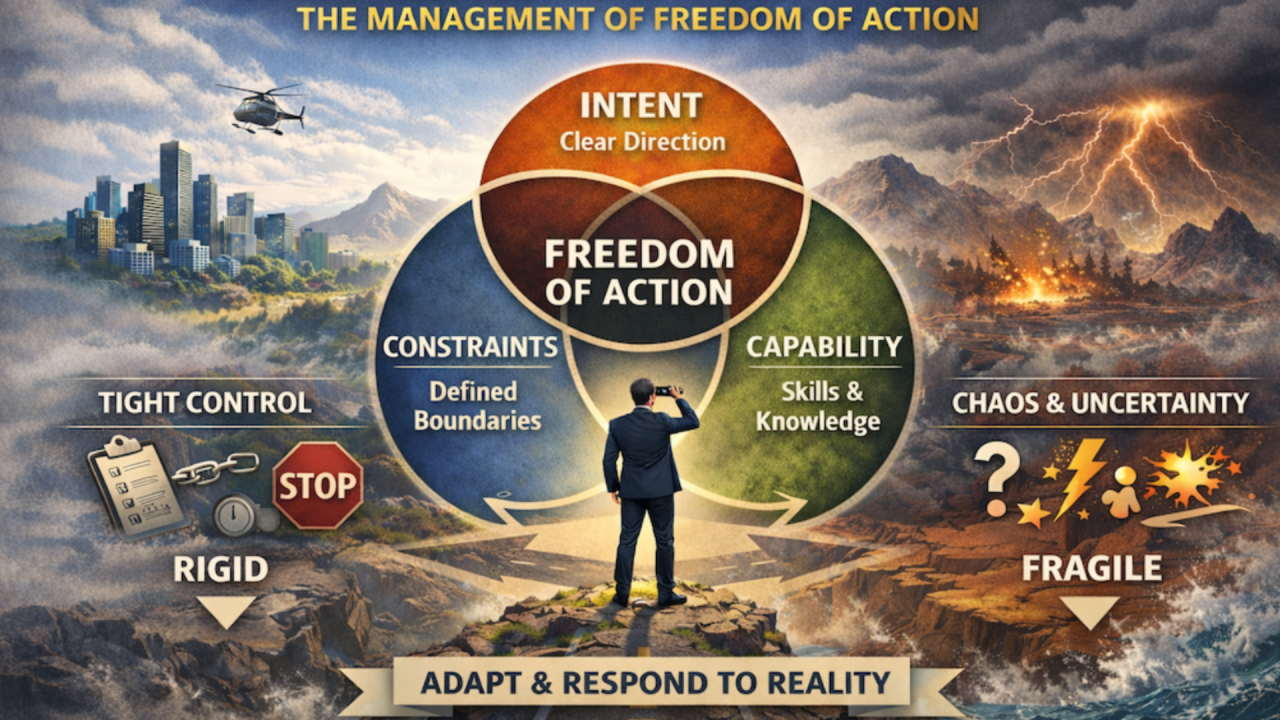
Execution Is the Management of Freedom of Action
Why strategy only survives contact with reality when you design for freedom of action, not tighter control
Most strategies do not fail because they are wrong (you can argue about the quality of the strategy itself, but that is for another day). It fails because organisations do not understand what execution actually is. They treat execution as delivery, as rollout, as the point at which a plan is translated into tasks and milestones and then monitored for compliance. When execution disappoints, the diagnosis is almost always the same: poor alignment, weak accountability, insufficient grip.
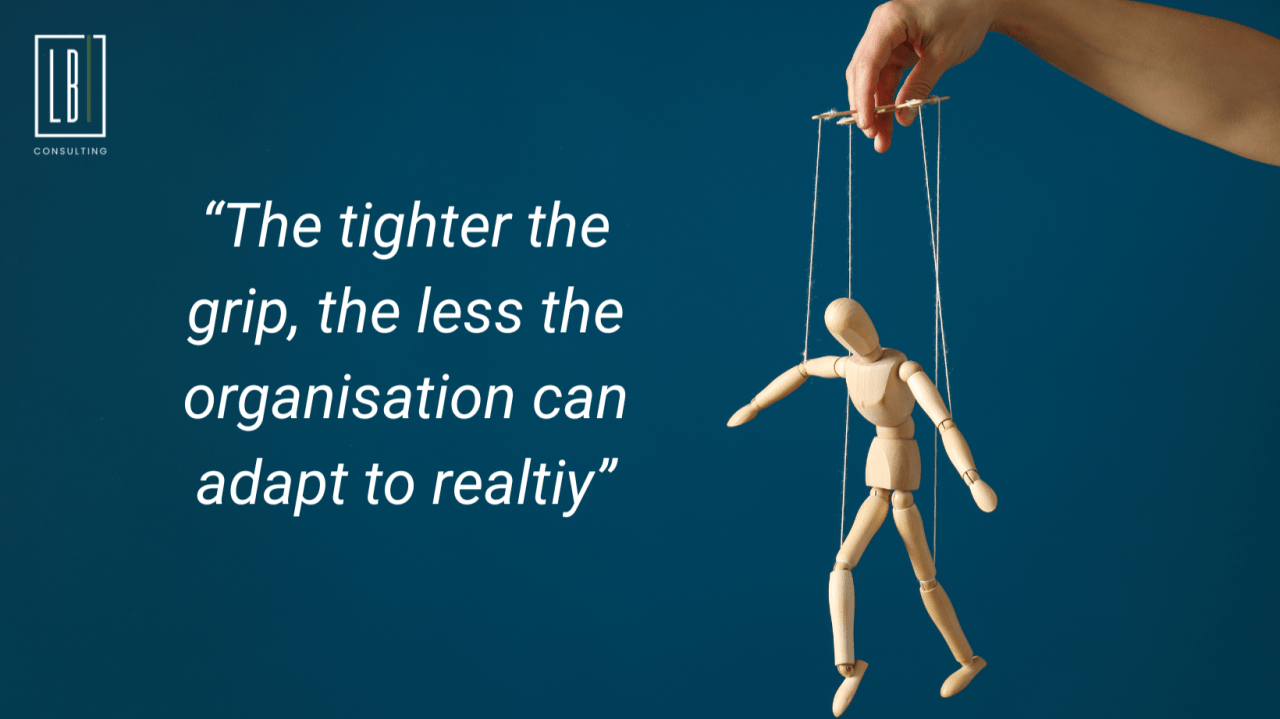
Execution is about adaptation, not control
Why execution fails when organisations stop adapting
We like to think that execution is the rational part of organisational activity. Strategy sets the direction, and execution is just doing what needs to be done. However, this idea only makes sense in a stable and predictable world.

Strategy as a way of being, not an output
Too often, we talk about strategy as if it were an artefact. Something you produce, publish, and put on a shelf. A plan, a framework, a deck.
But strategy is not a thing. It is not an output.
Strategy is a way of being.
It is lived. It is enacted. It is a way of thinking, a way of behaving, and most of all, the ongoing pursuit of viability.

A Strategy that Survives Contact with Reality Starts by Protecting Your Ability to Act
Most strategies fail because people are boxed in, not because they’re unmotivated
We spend too much time assuming strategy fails because of poor thinking, faulty plans, or lack of buy-in. But more often, strategy fails in execution because, when it meets the real world, the organisation is unable to act.
Not unwilling. Unable.
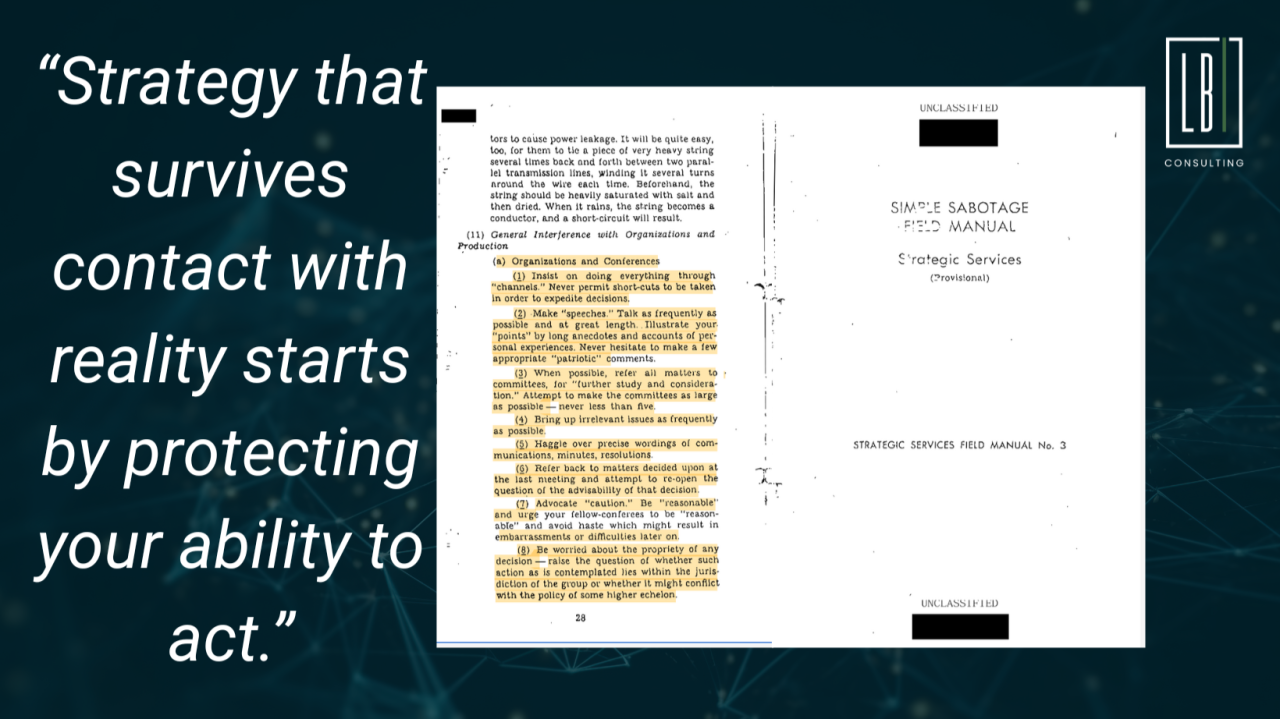
How strategy execution really fails: Lessons from the CIA's simple sabotage manual.
The real enemy of execution isn't resistance. It's subtle sabotage disguised as regular work.
In 1944, the CIA's predecessor, the OSS, published a field guide to help ordinary citizens sabotage enemy operations from within. The now-declassified Simple Sabotage Field Manual is both darkly comic and brutally insightful.

The plan is nothing, planning is everything
The value isn't in the plan. It's in how you prepare to adapt.
There's a military adage that's made its way into business circles: "No plan survives first contact." Eisenhower sharpened it further: "The plan is nothing; planning is everything."
But most organisations still treat planning as if the goal is to lock everything down. Define every milestone. Predict every variable. Control every outcome.
And then they are surprised when it falls apart.

The Strategic Ambiguity Advantage: Leading Through Intent, Not Instruction
One phrase in boardrooms and strategy offsites worldwide still dominates: “We need clarity.” Clarity of vision, purpose, and strategy. And yet, in a complex and shifting world, pursuing absolute clarity can be a trap.
What if strategic ambiguity isn’t a weakness to be fixed but a strength to be wielded?
Mike's presentation delves into the complexities of the modern business landscape, sharing insights and approaches that can help leaders navigate challenges effectively.
In complex and high-stakes environments, stability is an illusion. Reflecting on my experiences as a soldier in Afghanistan, this talk explores the challenges of adapting strategy and execution in the face of chaos, risk aversion, and an agile adversary.
Podcasts and Talks.
Apperences from our founder Mike Jones.
Systems Thinking and Strategy for Leaders : Join us for an insightful interview with Mike Jones, founder and director of LBI Consulting, as we dive into the world of systems thinking and strategy.
In this episode, Mike Jones critiques leaders’ obsession with alignment, consensus, and “working better together” sessions, arguing instead for organizational coherence built on clear intent, appropriate constraints, resources, decision rights, and effective control mechanisms.
This week, we chat with Mike Jones [ @StrategyMeetsReality ] about why mainstream strategy and leadership have become performative and detached from organizational reality. Mike argues business schools and social media encourage “magic wand” leadership, while many Silicon Valley firms centralize decisions, remove agency, and then blame people for their collective failures.
Mike Jones, Strategic Advisor at LBI Consulting and host of Strategy Meets Reality, challenges the conventional approach to strategy. From his military background to studying cognitive psychology, Mike reveals why most organisational strategies fail and how leaders can adopt a continuous, adaptive approach to strategic thinking. This conversation explores the gap between strategy documents and strategic reality.
In this episode of The Change Agent Podcast, Eric sits down with Mike Jones, Founder and Director of LBI Consulting, to explore what leadership and strategy actually look like when certainty disappears and complexity takes over.
In this reflective solo episode, Mike Jones steps back from the guest chair to explore a deeper truth: strategy is failing long before execution begins.
Mike sees strategy not as a top-down process, where the wishes of management become the gospel of the employees: strategy emerges from the actions of all. In this process, the Viable System Model is a valuable tool to develop a strategy and Mike explains how.