

Insights on Strategy, Execution & Complex Organisations
I write about how strategy, execution and organisational design work in real-world environments — the kind that resist simple plans, reward systems thinking, and require leaders to adapt with clarity and purpose. Here you’ll find insights on strategic ambiguity, strategic manoeuvre, organisational viability, decision-making in complexity, and practical leadership thinking.
Browse the latest articles, or explore by topic below.
Shaped by Default
Most strategies organisations produce are just projections of ambition or flattering stories they want people to believe. Most fail to produce any effect that meaningfully changes the organisation's relationship to its environment.
This is the equivalent of making a wish in front of a birthday cake, changing nothing about how you live, and assuming the wish will find its way to you. Most strategy development takes this shape: declare a vision, let the machine run, produce the Greek Temple, amplify the narrative to the world, and try to optimise the parts while the whole fails to produce the effect required to shape the external environment to your advantage.
Strategy execution fails in the gaps between functions
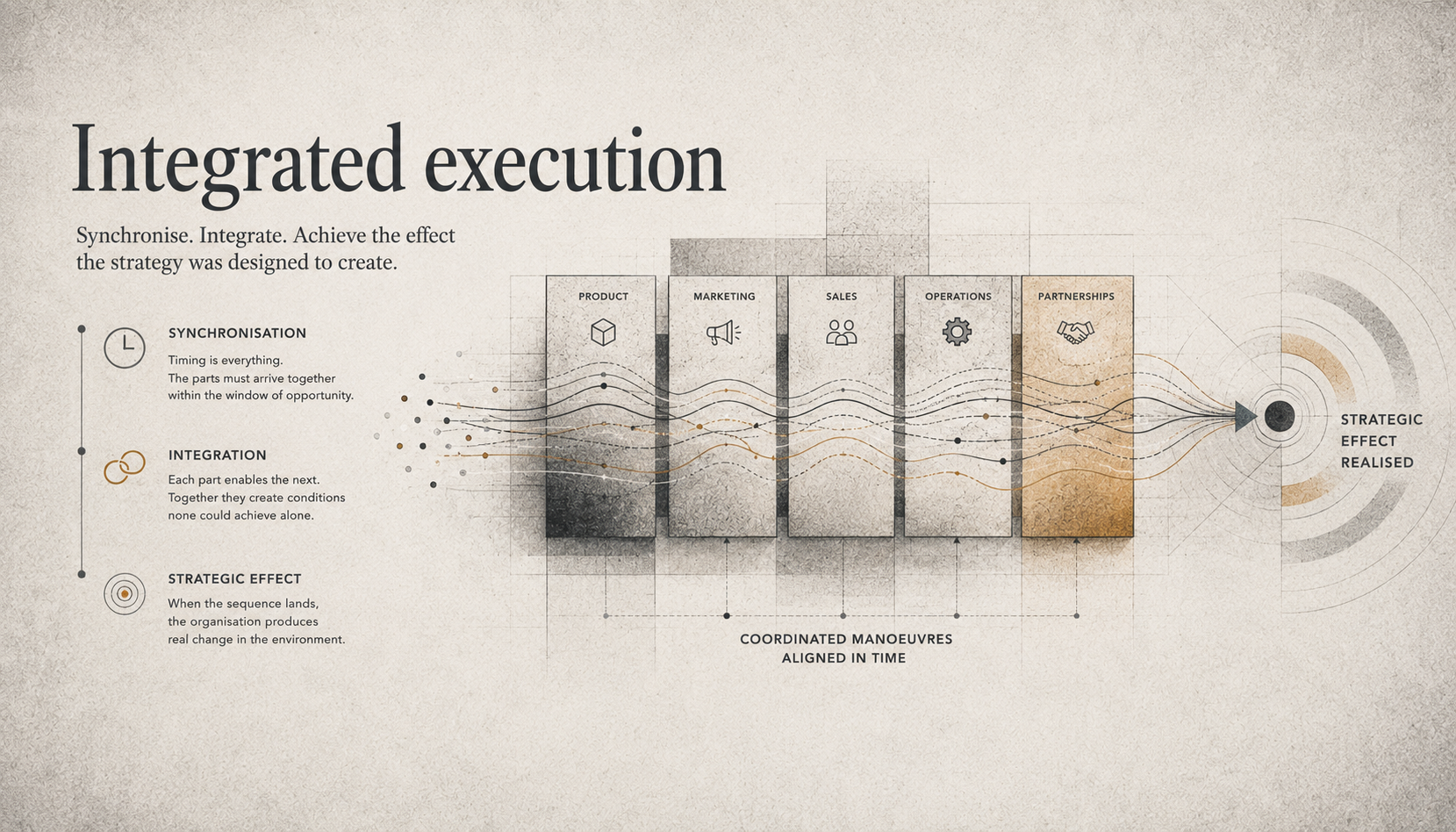
Strategy rarely fails because individual functions are incompetent. It fails because the organisation cannot act as an integrated organisation when the situation requires it, across the structural boundaries that separate its parts. That is a different problem from alignment, capability, or even execution in the usual sense. And it needs a different kind of answer.
The Machine That Lies to You
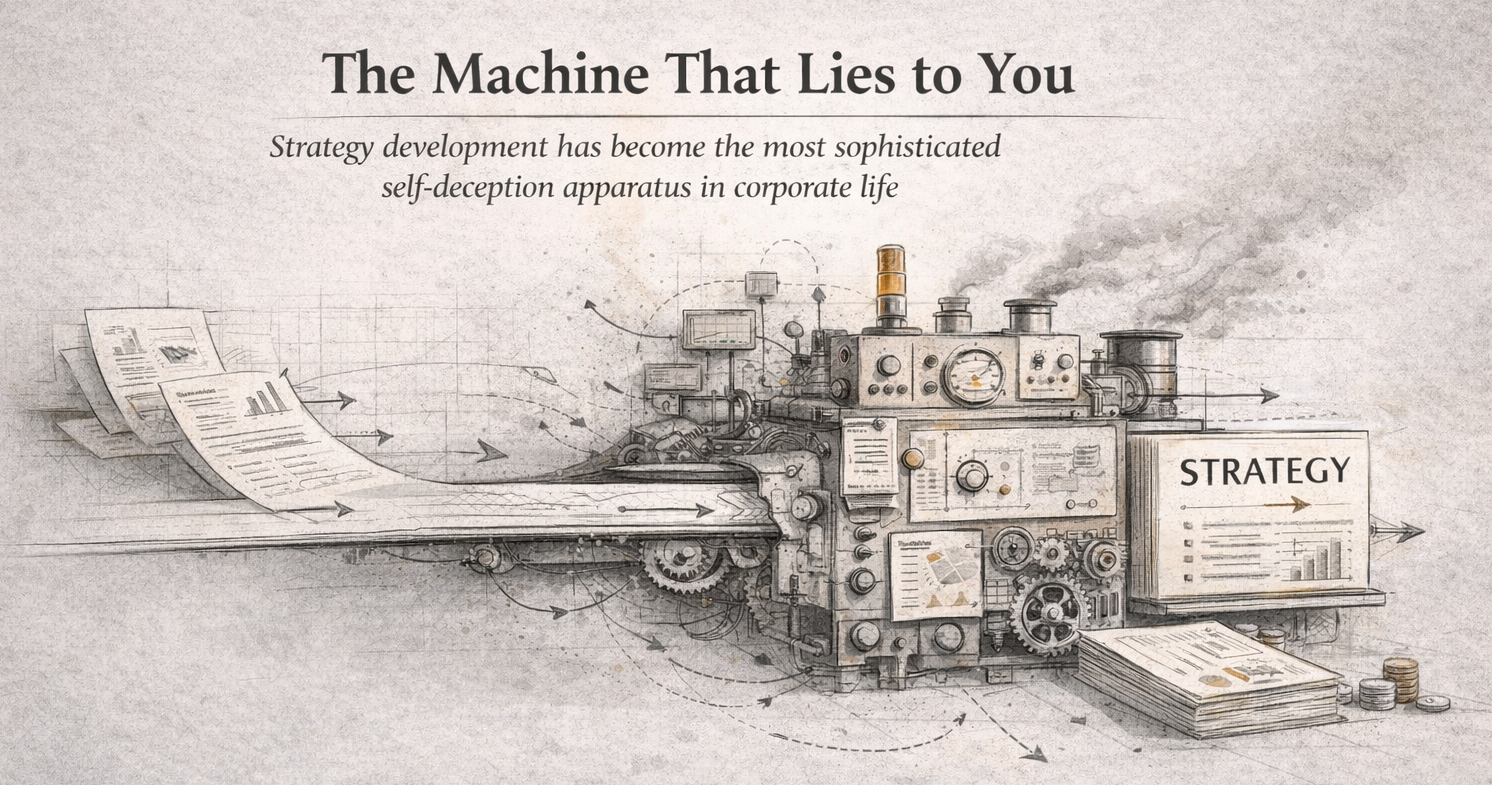
Bach was writing about individuals. The argument is particularly poignant when applied to organisations. Organisations tell themselves lies for the same reasons people do, and they have built industrial machinery to do it reliably, on a schedule, with a budget line and a deliverable.
The machinery is called strategy development. It is the most sophisticated self-deception apparatus in corporate life, and it runs so smoothly that nobody inside it can see what it is actually doing.
The Strategy You're Actually Running
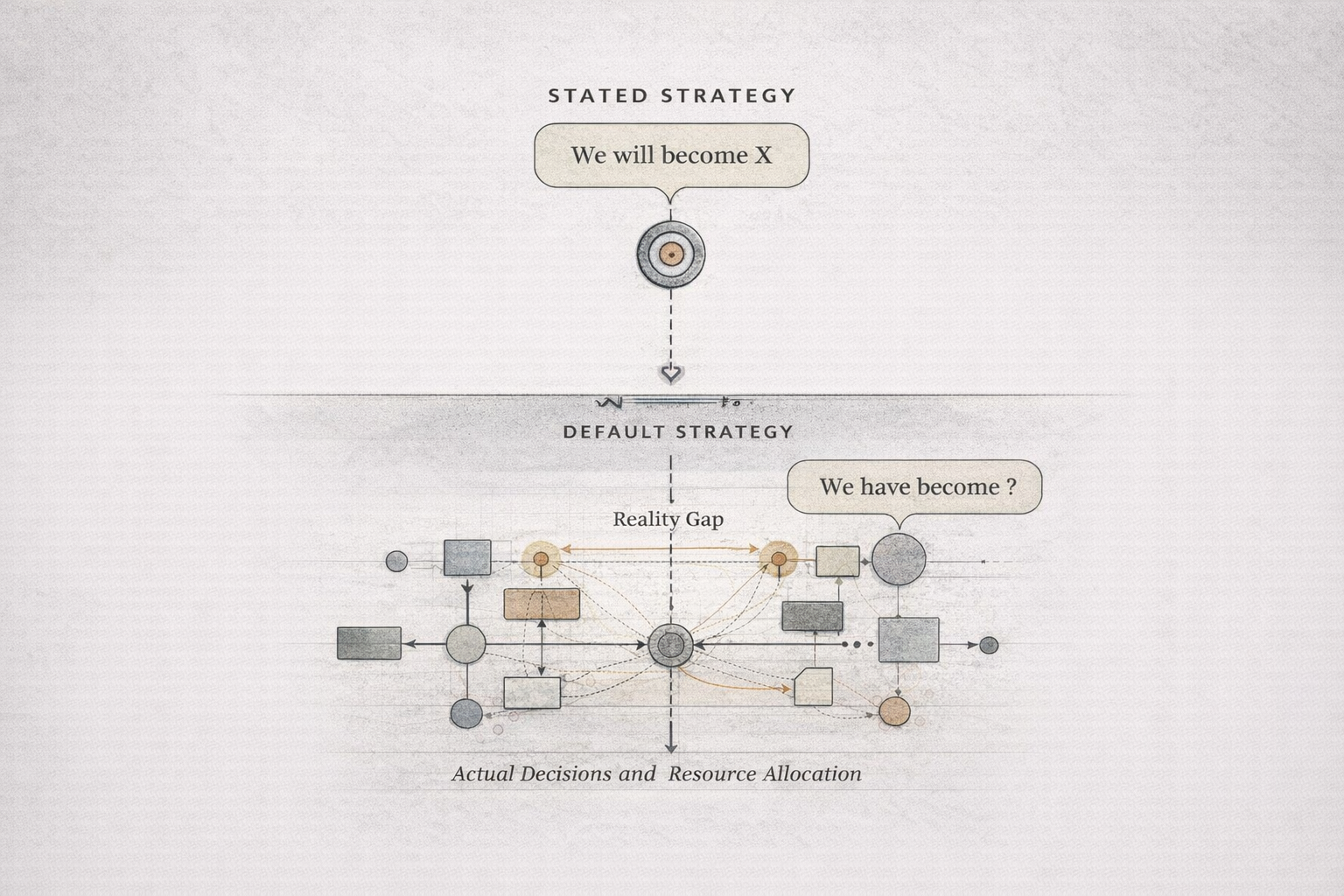
Every organisation has one. The question is whether it is the one you intended.
Every organisation has a default strategy. It is being enacted right now, in every decision made, every resource allocated, every response to every pressure arriving from the environment.
The question is not whether you have a strategy. You do. The question is whether the one being enacted is the one you stated. And if it is not, whether you even know.
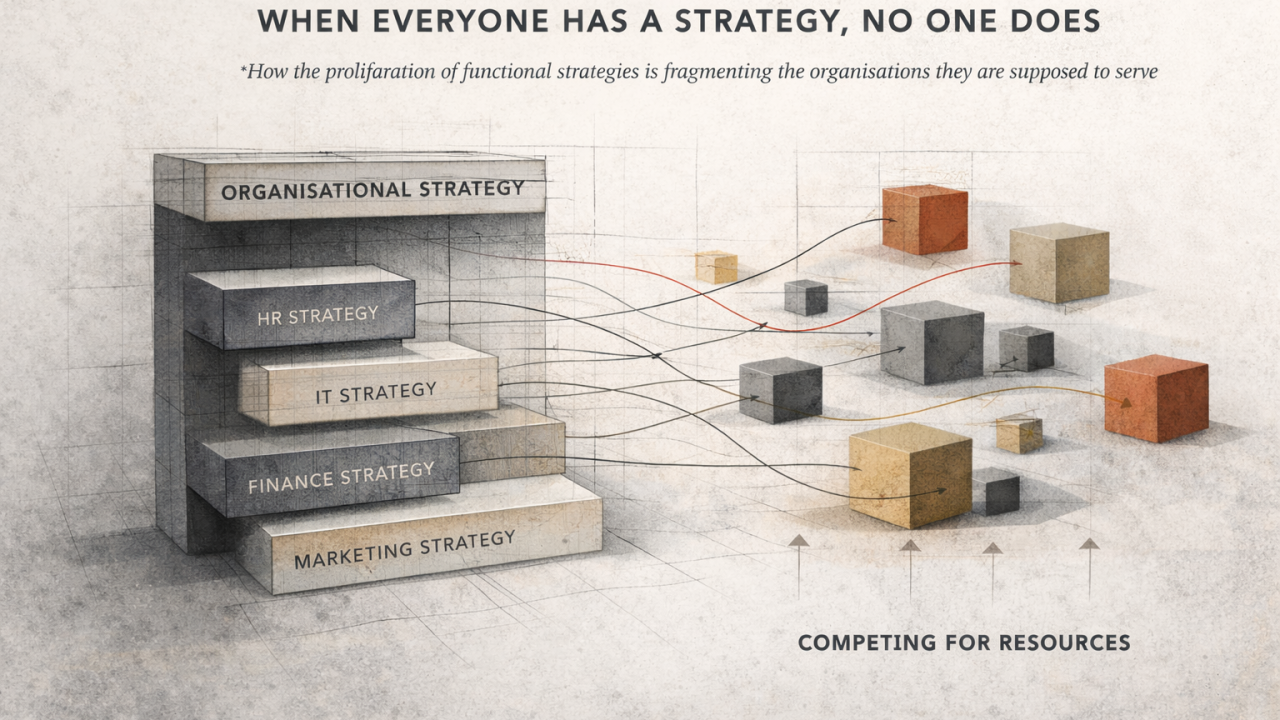
When Everyone Has a Strategy, No One Does
There is a word that has lost all meaning in organisations. Strategy.
Every function has one now. HR has a people strategy. IT has a technology strategy. Finance has a financial strategy. Marketing has a brand strategy. And somewhere above all of them, there is supposed to be an organisational strategy. Except by the time you have finished counting all the strategies, you have not described a coherent direction at all. You have described a competition for resources.
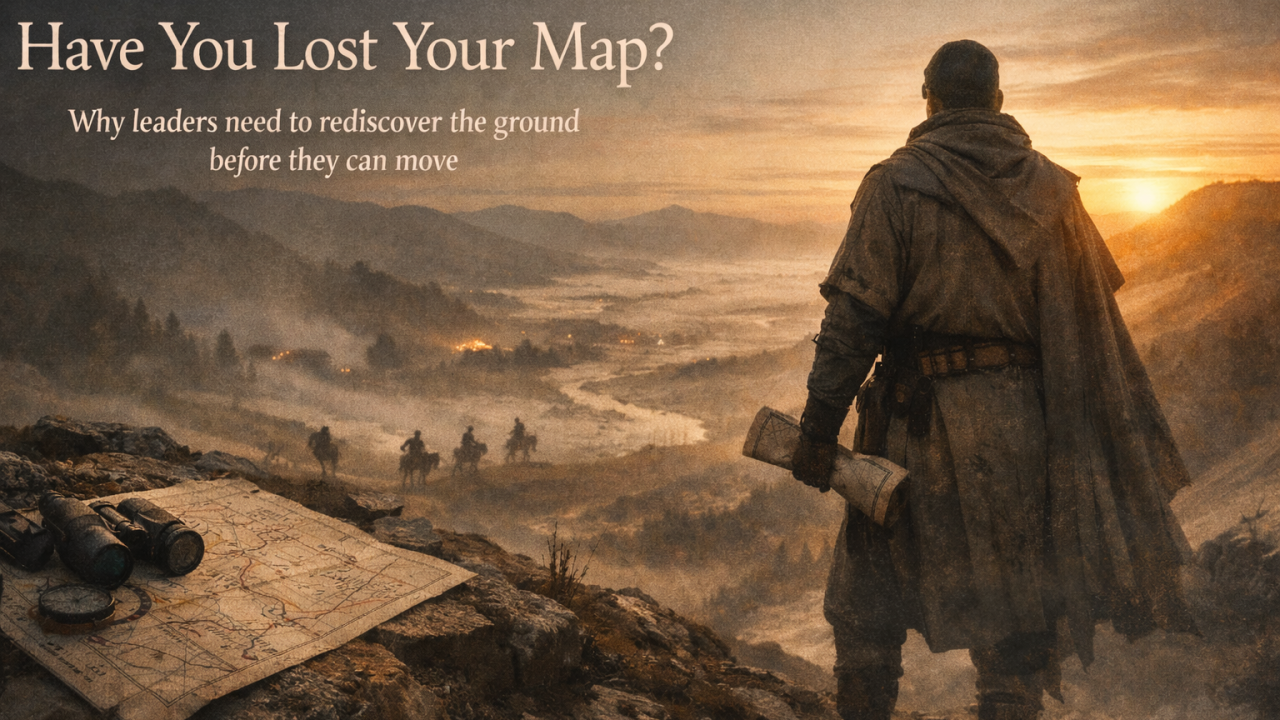
Have You Lost Your Map?
Why leaders need to rediscover the ground before they can move
A commander stands on a ridge at first light. The air is cold, the ground uneven. Scouts return in ones and twos, each with fragments of information that contradict the last. The map does not match the terrain. Units are not where they were supposed to be. The enemy has advanced more quickly than expected. The weather has turned. Every decision involves trade-offs that will hurt someone. There is no pause button.

Shaping or Being Shaped? Strategy, Identity and Structural Disposition
Why strategy starts with understanding how you're already being shaped
Leaders like to tell themselves they are shaping the game.
Most of the time, the game has already decided which kinds of moves they will even recognise as “strategic.”
The uncomfortable starting point is this: strategy is never just a set of choices about the external environment. It is always an expression of what the organisation already is, its identity, structure, relationships, and the stories it tells itself about what counts as success.

Strategic Ambiguity: When Clarity Becomes the Enemy of Strategy
The Clarity Trap
“We need more clarity.”
It is the most common refrain in strategy reviews, boardrooms, and leadership off-sites. Clarity of vision. Clarity of priorities. Clarity of execution. In stable, knowable environments, this instinct makes sense. In a world wrapped in what Clausewitz called “the fog of greater or lesser uncertainty,” the relentless pursuit of clarity can become strategic self-harm.
What if the problem is not that we lack clarity, but that we try to impose it where it does not belong?
Mike's presentation delves into the complexities of the modern business landscape, sharing insights and approaches that can help leaders navigate challenges effectively.
In complex and high-stakes environments, stability is an illusion. Reflecting on my experiences as a soldier in Afghanistan, this talk explores the challenges of adapting strategy and execution in the face of chaos, risk aversion, and an agile adversary.
Podcasts and Talks.
Apperences from our founder Mike Jones.
Systems Thinking and Strategy for Leaders : Join us for an insightful interview with Mike Jones, founder and director of LBI Consulting, as we dive into the world of systems thinking and strategy.
In this episode, Mike Jones critiques leaders’ obsession with alignment, consensus, and “working better together” sessions, arguing instead for organizational coherence built on clear intent, appropriate constraints, resources, decision rights, and effective control mechanisms.
This week, we chat with Mike Jones [ @StrategyMeetsReality ] about why mainstream strategy and leadership have become performative and detached from organizational reality. Mike argues business schools and social media encourage “magic wand” leadership, while many Silicon Valley firms centralize decisions, remove agency, and then blame people for their collective failures.
Mike Jones, Strategic Advisor at LBI Consulting and host of Strategy Meets Reality, challenges the conventional approach to strategy. From his military background to studying cognitive psychology, Mike reveals why most organisational strategies fail and how leaders can adopt a continuous, adaptive approach to strategic thinking. This conversation explores the gap between strategy documents and strategic reality.
In this episode of The Change Agent Podcast, Eric sits down with Mike Jones, Founder and Director of LBI Consulting, to explore what leadership and strategy actually look like when certainty disappears and complexity takes over.
In this reflective solo episode, Mike Jones steps back from the guest chair to explore a deeper truth: strategy is failing long before execution begins.
Mike sees strategy not as a top-down process, where the wishes of management become the gospel of the employees: strategy emerges from the actions of all. In this process, the Viable System Model is a valuable tool to develop a strategy and Mike explains how.